Can You Really Own Property Through Blockchain?
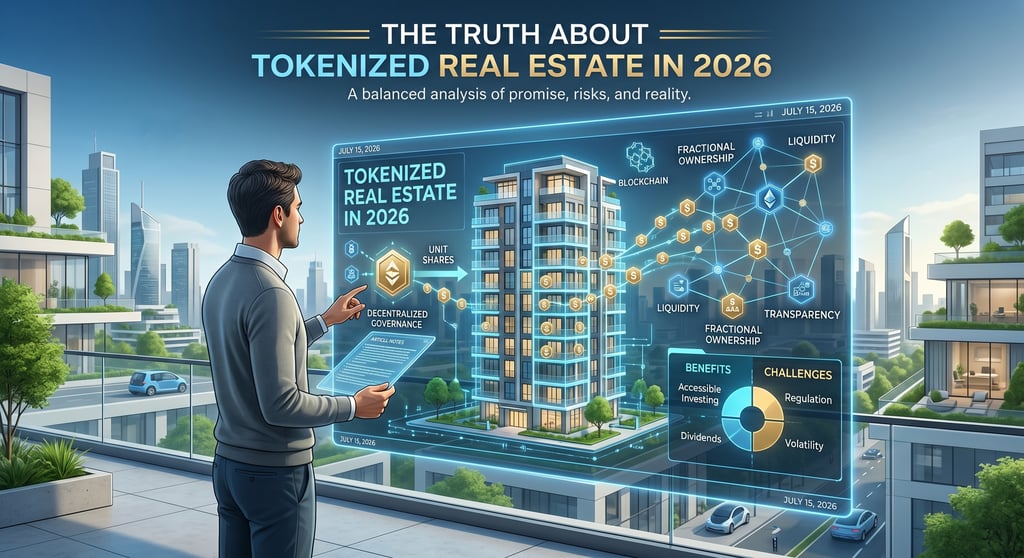
The Truth About Tokenized Real Estate in 2026
5/8/20242 min read
Can You Really Own Property Through Blockchain?
The answer is yes—but not usually in the manner people assume.
You can gain real economic ownership or legal rights connected to property through blockchain systems, but in most cases the blockchain token itself is not the land title deed. The legal structure behind the token matters far more than the technology.
Now blockchain technology is redefining that conversation.
Across the USA, UK, UAE, and other key markets, investors are testing a new opportunity dubbed tokenized real estate—the notion that you may acquire a part of a property through digital currencies.
What Is Blockchain Property Ownership?
Blockchain property ownership typically implies a real estate asset is split into digital shares called tokens. These tokens are stored and shared on a blockchain. Instead of owning a whole building, people can buy individual parts of it. For example, a $1 million residential complex could be split into 100,000 tokens. Each token represents a share of ownership or rights related to the asset. Investors can buy as many tokens as they want. This process is called real estate tokenization. It lets regular people enter the property market with a lot less money than they would need to invest in real estate normally. Are You the Property's Legal Owner? This is where many new arrivals get lost. You Own Rights, Not the Title Most of the time, a company, trust, or special-purpose vehicle (SPV) legally owns the land in tokenized real estate deals. You then own coins representing:
Shares in that company
A portion of profits
Rental income rights
Sale earnings rights
Sometimes voting rights
That implies the company may protect the official title, but token users claim beneficial or economic ownership.
Rare Cases: Personalized Blockchain Land Ownership
Some governments are exploring with digitally connected land records, although this is still early-stage internationally. Most countries still rely on normal land records, not digital currency wallets, to prove ownership. Why is this becoming so popular in 2026? The tokenized asset market is growing because it solves many common problems with real estate.
1. Lower Barrier to Entry:
Buyers can start with much smaller amounts of money instead of needing $50,000 or more to buy land.
2. Fractional Ownership :
You can own part of numerous residences instead having all your money linked to one.
3. Global Access :
Someone in Pakistan, UK, or USA may invest in options overseas based on platform regulations.
4.Faster Transactions :
Blockchain can facilitate payments, reporting, and recordkeeping.
5. Passive Income Potential :
Rental income payments may be split among token users
Is It Legal in the USA and UK?
USA
Many tokenized property offerings may be classified as securities, meaning platforms must comply with investment requirements.
UK
Depending on structure, tokenized assets may come under financial promotion and regulated investing restrictions.
For this reason, transparent and regulated platforms are significantly more important than eye-catching advertising.



INSIGHTBLOG
Explore our blog for update t date about digital assets news and information.
Contact
Newsletter
info@instightblogcom
© 2026. All rights reserved.